 agridif.com
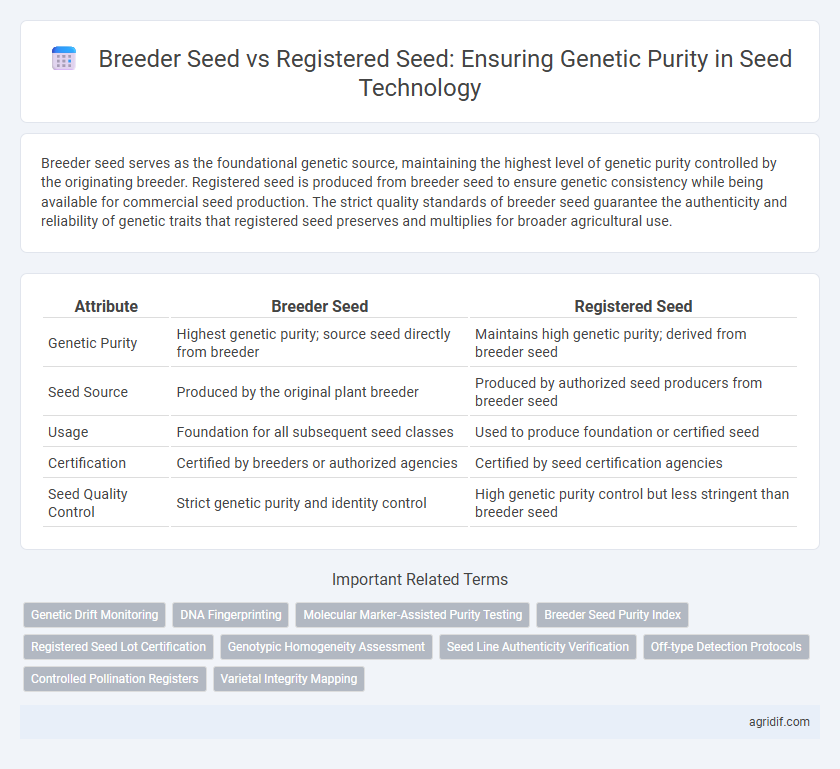
 Breeder seed serves as the foundational genetic source, maintaining the highest level of genetic purity controlled by the originating breeder. Registered seed is produced from breeder seed to ensure genetic consistency while being available for commercial seed production. The strict quality standards of breeder seed guarantee the authenticity and reliability of genetic traits that registered seed preserves and multiplies for broader agricultural use.
Table of Comparison
| Attribute | Breeder Seed | Registered Seed |
|---|---|---|
| Genetic Purity | Highest genetic purity; source seed directly from breeder | Maintains high genetic purity; derived from breeder seed |
| Seed Source | Produced by the original plant breeder | Produced by authorized seed producers from breeder seed |
| Usage | Foundation for all subsequent seed classes | Used to produce foundation or certified seed |
| Certification | Certified by breeders or authorized agencies | Certified by seed certification agencies |
| Seed Quality Control | Strict genetic purity and identity control | High genetic purity control but less stringent than breeder seed |
Overview of Seed Classes in Agriculture
Breeder seed maintains the highest level of genetic purity as it is directly derived from the original parent lines and its production is strictly controlled to preserve genetic identity. Registered seed is produced from breeder seed and undergoes rigorous inspections to ensure genetic purity and quality before being released for commercial seed production. These seed classes are fundamental in the seed production chain, ensuring genetic fidelity and uniformity essential for high crop performance.
Defining Breeder Seed and Its Characteristics
Breeder seed is the initial seed stock with the highest genetic purity, produced by the original developer of a crop variety and used to maintain the genetic identity of the cultivar. It serves as the foundation for producing registered seed, which is the next generation of seed multiplied from breeder seed and subjected to strict quality control but with slightly less stringent purity standards. Breeder seed is characterized by a controlled production environment, rigorous genetic testing, and documentation to ensure the preservation of varietal traits essential for subsequent seed classes.
Understanding Registered Seed and Its Role
Registered seed serves as a critical link between breeder seed and certified seed, ensuring genetic purity is maintained throughout the seed production process. It is produced by authorized agencies under strict quality control to preserve the genetic traits defined in breeder seed, making it essential for reliable crop performance. This stage guarantees the transfer of high genetic standards from breeder seed to the commercial seed supplied to farmers.
Genetic Purity: Importance in Seed Technology
Genetic purity plays a critical role in seed technology, ensuring the true-to-type characteristics of both breeder and registered seeds. Breeder seed serves as the original source with the highest genetic purity, providing a foundation for subsequent seed classes, while registered seed maintains a high purity level to support consistent crop performance. Maintaining genetic purity in these seed categories guarantees uniformity, vigor, and yield stability, which are essential for sustainable agricultural productivity.
Breeder Seed: Standards for Genetic Purity
Breeder seed is the original seed source genetically characterized and maintained with strict purity standards to ensure varietal identity and uniformity, essential for producing high-quality registered seed. Standards for breeder seed genetic purity typically require a minimum of 99.5% varietal purity, controlled generation increase, and rigorous field inspections to prevent genetic drift or contamination. Maintaining breeder seed purity safeguards the genetic base for subsequent seed multiplication, ensuring consistency in crop performance and true-to-type characteristics.
Registered Seed: Genetic Integrity and Maintenance
Registered seed undergoes rigorous genetic purity testing to ensure the maintained identity and uniformity of the variety, serving as a critical link between breeder seed and certified seed production. It is produced under controlled conditions adhering to strict phytosanitary and genetic standards to prevent contamination and genetic drift, safeguarding the cultivar's original traits. Continuous monitoring and validation through field inspections and lab analyses secure the genetic integrity of registered seed, ensuring high-quality propagation material for farmers.
Production Process: Breeder vs Registered Seed
Breeder seed production involves strict genetic selection and is maintained under controlled conditions to preserve the original genetic purity of the variety. Registered seed production follows breeder seed and includes rigorous field inspections and quality checks to ensure the seed remains true to type while being produced on a larger scale. The production process for breeder seed emphasizes genetic integrity, whereas registered seed production focuses on maintaining that purity through systematic multiplication and certification.
Quality Assurance: Testing and Certification Methods
Breeder seed undergoes rigorous genetic purity testing through molecular markers and grow-out tests to ensure the highest quality foundation for seed production. Registered seed is produced from breeder seed and certified through standardized quality assurance protocols, including germination tests, physical purity analysis, and seed health examinations. Certification agencies implement strict field inspections and laboratory testing to maintain genetic fidelity and prevent seed contamination in both breeder and registered seed classes.
Impact of Seed Class on Crop Performance
Breeder seed maintains the highest genetic purity, serving as the foundational source for subsequent seed classes and ensuring consistent crop traits. Registered seed, while derived from breeder seed, may exhibit slight genetic variation but still retains high fidelity suitable for commercial production. The impact of seed class on crop performance is significant; using breeder seed optimizes uniformity, disease resistance, and yield potential, whereas registered seed offers a balance between quality and availability for broader agricultural use.
Choosing the Right Seed Type for Genetic Purity
Breeder seed guarantees the highest genetic purity as it is directly maintained by the originating breeder, serving as the genetic baseline for subsequent seed classes. Registered seed, derived from breeder seed, maintains high genetic purity but may show slight genetic variation due to controlled multiplication processes. Choosing breeder seed ensures maximal genetic fidelity, while registered seed offers an optimal balance between genetic purity and seed availability for large-scale cultivation.
Related Important Terms
Genetic Drift Monitoring
Breeder seed maintains the highest genetic purity as it is directly sourced from the original breeder and undergoes strict genetic drift monitoring through controlled isolation and rigorous testing protocols. Registered seed, produced from breeder seed, experiences minimal genetic drift but requires continuous field inspections and molecular marker analysis to ensure ongoing genetic fidelity.
DNA Fingerprinting
Breeder seed ensures the highest genetic purity as it originates directly from the source parental lines, while registered seed undergoes further multiplication with monitored purity standards. DNA fingerprinting technology is crucial for verifying genetic identity and purity in both breeder and registered seeds, enabling precise detection of genetic contamination or admixture.
Molecular Marker-Assisted Purity Testing
Breeder seed ensures the highest genetic purity as it originates directly from the breeder's controlled source, whereas registered seed, while still genetically verified, undergoes further multiplication with slightly increased variability. Molecular Marker-Assisted Purity Testing provides precise genotypic identification, enabling accurate differentiation and verification of breeder seed versus registered seed to maintain seed quality standards.
Breeder Seed Purity Index
Breeder seed exhibits the highest genetic purity, with a Breeder Seed Purity Index often exceeding 99.5%, ensuring the true-to-type characteristics necessary for producing genetically uniform Registered seed. In contrast, Registered seed maintains high quality but may show slight genetic variation, reflected by a marginally lower Purity Index, typically around 98-99%, due to its production from Breeder seed under controlled conditions.
Registered Seed Lot Certification
Registered seed lot certification ensures the genetic purity and identity of seeds through rigorous field inspections and laboratory testing, confirming compliance with prescribed standards. Compared to breeder seed, registered seed undergoes more extensive certification processes to maintain uniformity and prevent genetic contamination before distribution to farmers.
Genotypic Homogeneity Assessment
Breeder seed undergoes rigorous genotypic homogeneity assessment to ensure maximum genetic purity, serving as the primary source for producing registered seed with consistent phenotypic traits. Registered seed, while derived from breeder seed, maintains genetic purity through stringent quality control but may exhibit slight variations due to environmental factors and seed multiplication processes.
Seed Line Authenticity Verification
Breeder seed maintains the highest level of genetic purity, serving as the primary source for all subsequent seed classes, while registered seed undergoes rigorous Seed Line Authenticity Verification processes to ensure it accurately represents the original breeder seed's genetic identity. Advanced molecular markers and DNA fingerprinting techniques are critical in verifying registered seed authenticity, preventing genetic drift and contamination in seed propagation systems.
Off-type Detection Protocols
Breeder seed undergoes stringent off-type detection protocols using molecular markers and visual inspections to ensure genetic purity at the source, whereas registered seed employs field inspections and lab testing to maintain uniformity during multiplication. Advanced genomic tools in breeder seed stages enable precise identification of off-types, reducing genetic contamination risks before commercial seed production.
Controlled Pollination Registers
Controlled Pollination Registers play a critical role in ensuring genetic purity by meticulously documenting breeding activities for breeder seed, which serves as the original source of genetic material. Registered seed production relies heavily on these detailed records to trace pedigree and maintain genetic integrity, preventing contamination and preserving varietal identity throughout seed multiplication stages.
Varietal Integrity Mapping
Breeder seed ensures the highest genetic purity as it is produced under strict supervision from the original breeder and forms the base for subsequent seed classes, while registered seed, derived from foundation seed, undergoes stringent varietal integrity mapping to verify genetic fidelity before commercial release. Varietal integrity mapping utilizes molecular markers and genomic tools to detect genetic deviations, preserving uniformity and performance standards critical for agricultural productivity.
Breeder seed vs Registered seed for genetic purity Infographic